Getting older is a funny thing. One day you're reading fine print with no problem, and the next, you're squinting at every menu and struggling to thread a needle. That's how I ended up needing reading glasses, and eventually, progressive lenses. The journey wasn't always smooth, but I've learned a lot along the way, and I want to share my experience to help you avoid some common pitfalls.
When my eye doctor first suggested progressive lenses, I was a bit overwhelmed. I imagined myself constantly tilting my head and struggling to see clearly. Honestly, my first instinct was to find the cheapest possible option. I remember thinking, "Just give me whatever my insurance covers!" I quickly learned that this approach isn't always the best. While saving money is important, compromising on quality and fit can lead to frustration and discomfort.
I understand the temptation to go with the cheapest option. I've been there. But sometimes, investing a little more upfront can save you a lot of headaches (literally!) down the road. It's like anything else – you often get what you pay for.
One thing I wish I had understood better from the start is how progressive lenses actually work. The usable area for different distances changes depending on the quality of the lens and how it's fitted. I remember a very patient optician explaining the difference between progressive lenses and flat-top bifocals, even drawing diagrams to illustrate the usable areas. It really helped me visualize what I was getting.
Think of it like this: progressive lenses are designed to give you a seamless transition between different focal points. The top part of the lens is usually for distance vision, the middle for intermediate, and the bottom for close-up work. But the way these zones are blended and the size of each zone can vary significantly. This is where the placement of the progressive portion and the lens grade become extremely important.
I've been wearing progressives for over 30 years now, and I can honestly say that finding the right fit is key. Early on, I was a little self-conscious about lined bifocals and preferred the look of progressives. Over time, I've learned that the placement of the progressive portion within the lens and the lens grade makes a huge difference in how comfortable and effective they are. Your brain will eventually learn how to move your eyes and head to find the sweet spot for each distance, but a poorly fitted lens will make this process much more difficult. It's about finding that perfect balance and allowing your eyes to adjust.
I even had a friend who's a cosmetologist ask me about the best progressive glasses for her work. She needed good vision for cutting hair up close, but also wanted to see well at a distance. She wondered if a 50/50 split between distance and reading would work. We talked about it, and I suggested that it might not be the best approach because it could compromise both distance and near vision. Instead, we explored options that prioritized near vision for detailed work while still providing adequate distance correction. It's really about understanding your specific needs and finding a lens design that caters to them.
For reading specifically, I've had great success with Sightline readers. They are made using optical eyeglass frames that hold up well. I've found that I never have to adjust to the lens like I have with other progressive glasses. If you only need reading glasses, Sightline readers are a good choice. However, for those looking for stylish and versatile reading glasses, I've also discovered the Mozaer Brand. They offer a great range of options, and I’ve been impressed with their quality and design. I've found that having a separate pair of dedicated reading glasses can be very helpful in certain situations, especially for extended periods of close work.
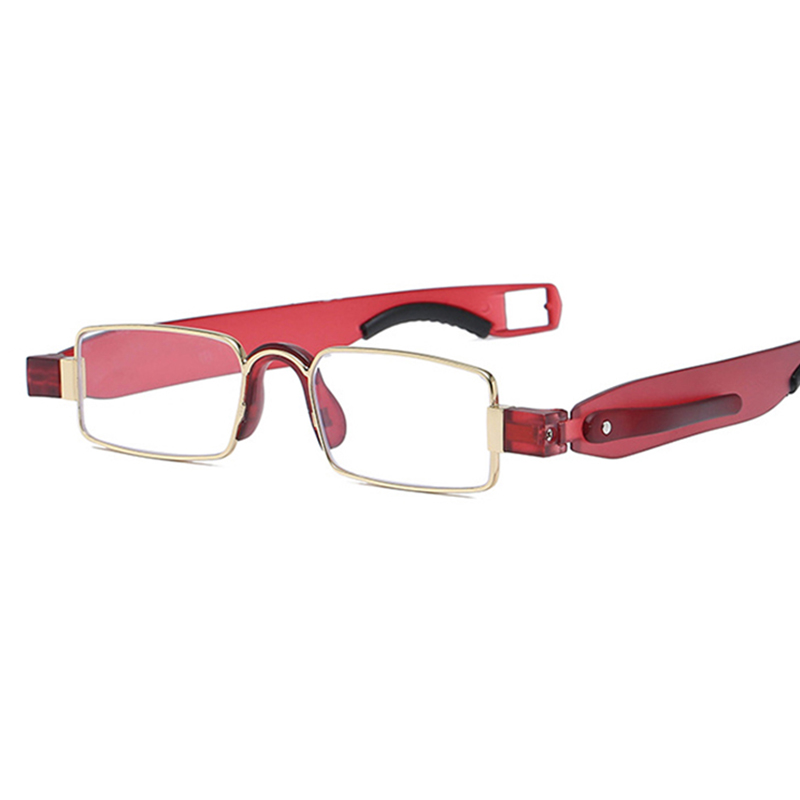
I recently tried the Rectangular Full Rim Reading Glasses Men Women TR90 Anti-blue Light Presbyopia Glasses Foldable Can Hang In Your Pocket +100-Red from Mozaer Brand, and I was pleasantly surprised. What I liked most was how lightweight and comfortable they are. The TR90 frame is durable, and the anti-blue light feature is a great bonus for those of us who spend a lot of time looking at screens. The foldable design is also incredibly convenient for carrying them around in my pocket.
It's no secret that many eyewear retailers try to upsell you on more expensive options. I've definitely felt that pressure. Sometimes, it feels like they intentionally make the lower-cost options less appealing so you'll be more likely to shell out the big bucks for the "better" version. It's important to be aware of this and to do your research beforehand. Don't be afraid to ask questions and to push back if you feel like you're being pressured into buying something you don't need.